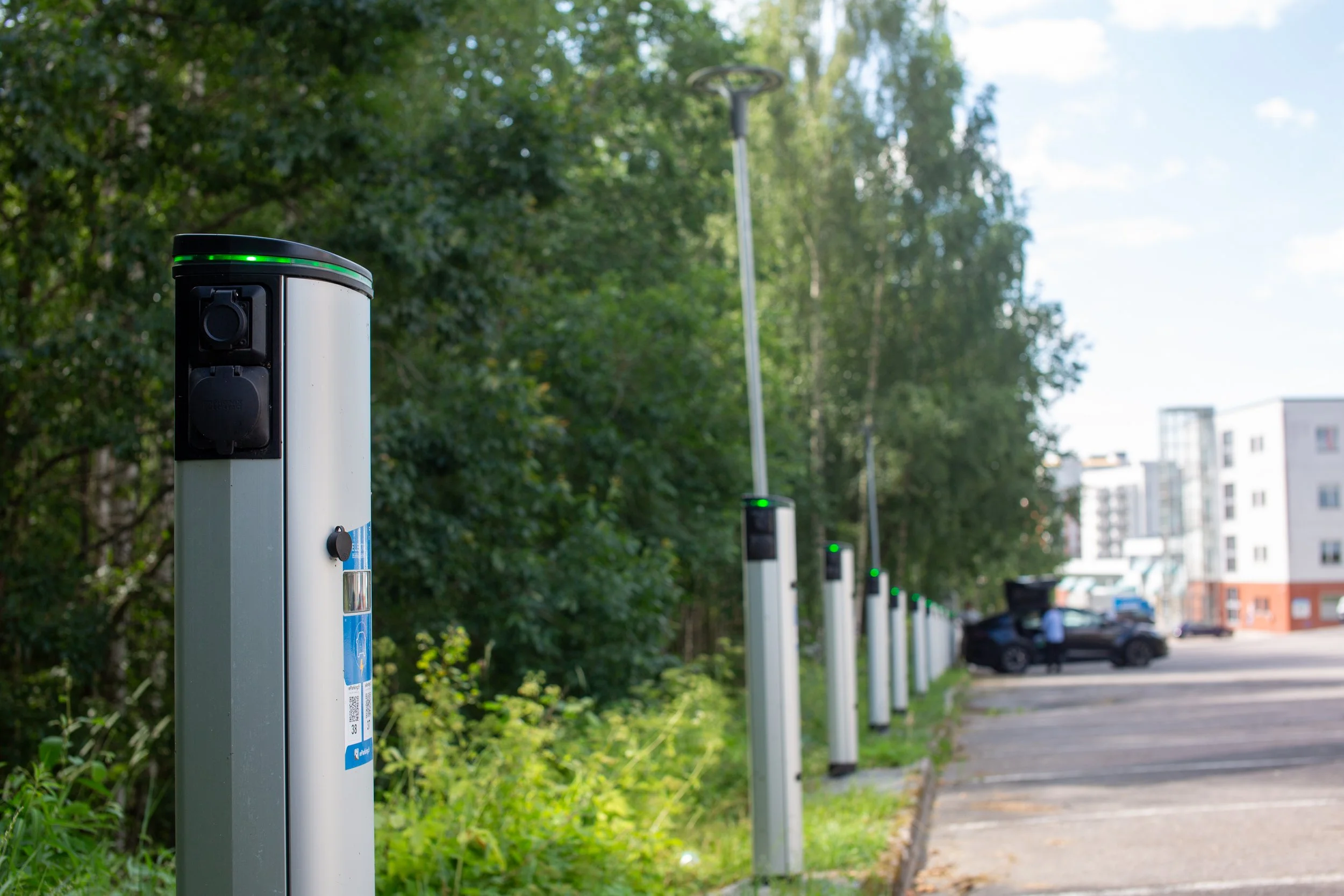
IGL Hardware Platform
A comprehensive ecosystem for EV charger manufacturing
The IGL Hardware Platform is a modular hardware and software ecosystem for building and upgrading EV charging infrastructure. It is not just a single component, but a scalable entity that covers everything from the internal electronics of a charging point to centralized local networking and cloud connections
Smart Components
CORE & NECU Technology
Pre-tested and certified control components for new charging stations as well as for the smart upgrading of existing infrastructure. The modular design minimizes investment costs and accelerates product development.
Read more →Connectivity Devices
eGateway Technology
The heart of the system that connects the local charging network to the cloud. A single eGateway device can wirelessly manage over a hundred charging points using a self-healing MESH network.
Read more →Dynamic Load Management
CAMU Technology
Smart power distribution ensures that the property's electrical grid is not overloaded. The multi-level system monitors total consumption in real time and safely optimizes charging power according to other electricity usage.
Read more →
ISO 27001 certified
·
100 000+ charging points
·
Platinum credit rating
·
15+ years of experience
·
ISO 27001 certified · 100 000+ charging points · Platinum credit rating · 15+ years of experience ·
Smart components
CORE & NECU Technology
CORE Technology Features
Hardware and Structure
- Modular architecture: The hardware consists of control (CORE-C), socket (CORE-S), power supply (CORE-P), and ISO 15118 (CORE-I) boards.
- Integration: The components are designed for easy mechanical integration. Wiring and heat loss are optimized.
- Sockets: Floating Type 2 socket technology, with a Schuko option also available.
Connectivity and Intelligence
- Centralized intelligence: The need for built-in intelligence in the charging devices is minimized by connecting them wirelessly to an eGateway device.
- Local connections and cloud: Local data transfer is handled via a wireless OpenThread MESH network, Ethernet, or Bluetooth. Cloud connections operate via 4G or Ethernet.
Standards and Protocols
- Protocols and standards: The platform is operator-independent and directly supports OCPP versions 1.6, 2.0.1, and 2.1.
- ISO 15118 readiness: Built-in support enables future Plug & Charge automation as well as bidirectional V2G (Vehicle-to-Grid) charging.
Production and Maintenance
- OEM cost-efficiency: Pre-tested and certified components accelerate product design and significantly reduce investment costs.
- Production tools: A ready-made testing suite for manufacturers, along with tools for device commissioning.
- Fault tolerance: Designed for demanding conditions, the system includes automatic fault handling and recovery.
- Maintainability: Supports remote resets, predictive maintenance, replaceable components, and remote feature updates.
Features of the NECU unit for Supersuko devices
Hardware and Structure
- Purpose: NECU (Next generation eTolppa Control Unit) is a control and communication module installed inside the charging and heating device.
- Remote control: Enables the scheduling and monitoring of charging and heating events.
- OCPP: All NECU devices utilize the OCPP protocol. They can be connected to management software and operating platforms from various manufacturers.
Connectivity and Intelligence
- Centralized intelligence: The need for built-in intelligence in the charging devices is minimized by connecting them wirelessly to an eGateway device.
- Local connections and cloud: Local data transfer is handled via a wireless OpenThread MESH network, Ethernet, or Bluetooth. Cloud connections operate via 4G or Ethernet.
- Load management: With NECU devices, load management is handled using a simple on/off principle.
Connectivity Devices
eGateway Technology
Scalable MESH network
- Large capacity: A single eGateway device enables connecting over a hundred charging points to the cloud.
- Self-healing: The wireless MESH network is fault-tolerant and automatically heals itself if any charging point in the network malfunctions.
Connections and interfaces
- Cloud connection: The hardware handles the connection to backend systems using either a 4G or Ethernet connection.
- OCPP support: eG 3.0 provides an operator-independent and standardized interface, supporting OCPP versions 1.6, 2.0.1, and 2.1.
Dynamic Load Balancing
CAMU Technology
Level 2 dynamic management
- Mixed load management: CAMU (Compact Ampere Measuring Unit) measures the property's other electricity consumption in real time and protects the main fuses from overloading.
- Optimized charging power: When the property's other consumption is high, the charging power is restricted. As other consumption decreases, the charging stations immediately receive more power.
Software-based group management
- Inter-device intelligence: If an electrical group contains only charging devices, dynamic power distribution occurs via software between the eTolppa devices within their own Mesh network.
- Cost-efficiency: In pure charging groups, a separate CAMU measuring unit is not needed; instead, the system distributes a static maximum current limit among the vehicles being charged.
Hierarchical architecture
- Multi-level control: In large sites, CAMU units can be installed across multiple levels (e.g., main switchboard and sub-boards) to dynamically calculate the available capacity at each node.
- Retrofit sites: Enables the phased construction of a charging network into existing infrastructure without the need for expensive main fuse upgrades.
Flexible connection solutions
- Field network integration: CAMU can connect directly to the charging field's eGateway network wirelessly if the distance is under 25 meters.
- Dedicated eGateway: For measurement points far from the field, CAMU can be equipped with its own eGateway unit and a fixed 4G/Ethernet connection. The system can even be installed before the actual charging devices.
How does Level 2 load balancing work?
Are you interested in hearing more?
Leave us a message, and our experts will help you find the best solution for your property, business, or device manufacturing.